.avif)


.png)

.png)






.avif)







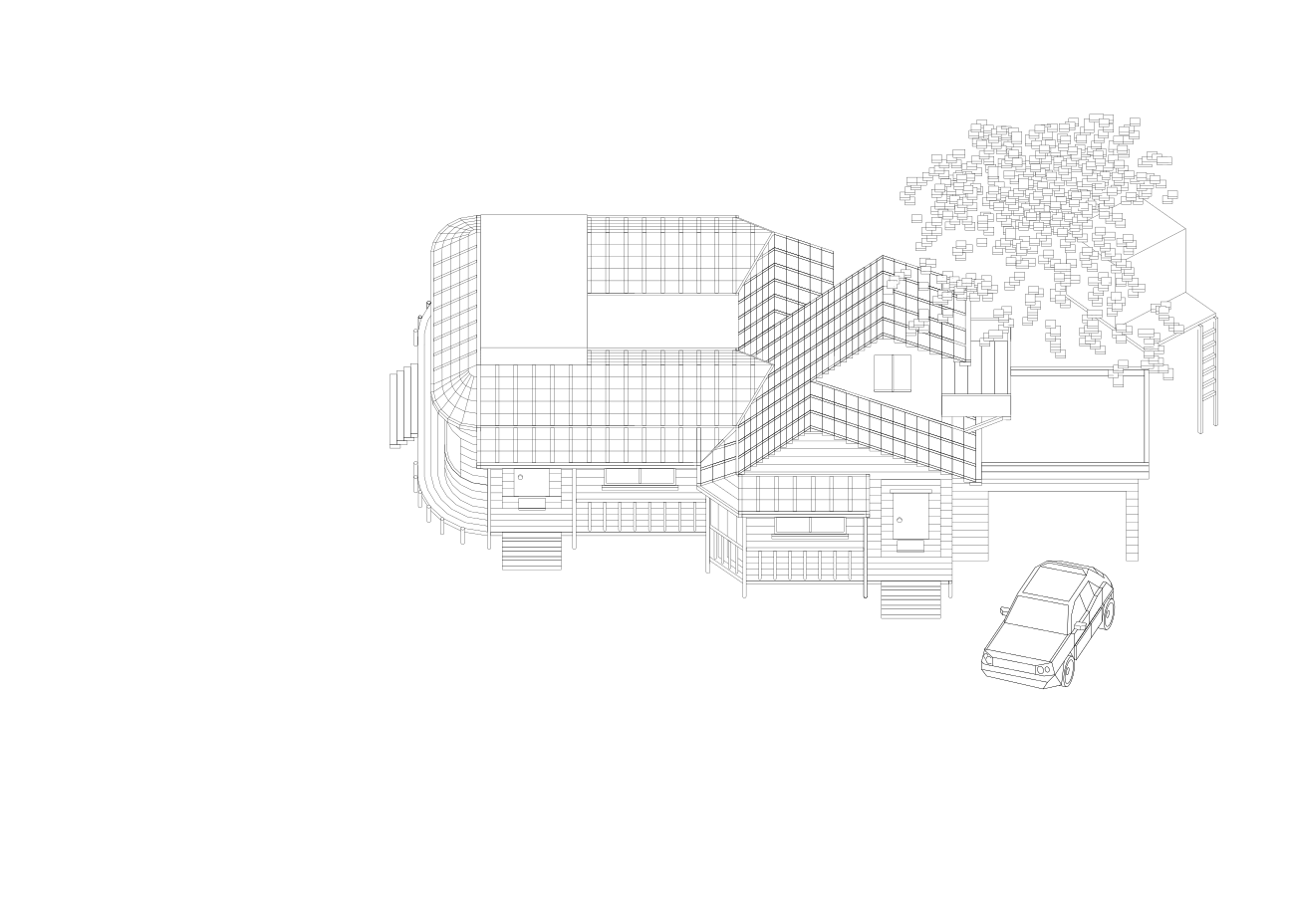










flexible cover that fits your life
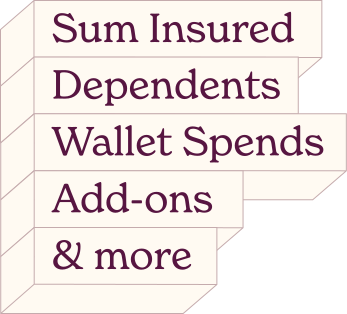
Start with who you're covering. Then add what matters. Every choice you make here shapes your plan — and your space.
Your employer has put this toward your cover. Use it however you like. Go over and we'll add the difference as a small yearly premium, paid by you.
The number above is a sample, your employer decides what actually goes in.
first, who’s under your roof
now, build on it
These add-ons sit on top of your base plan.
Choose what fits your life.
Available when you've got family in your plan
Your plan breakdown




a space designed for the way you care, and a benefits policy designed for your exact needs.
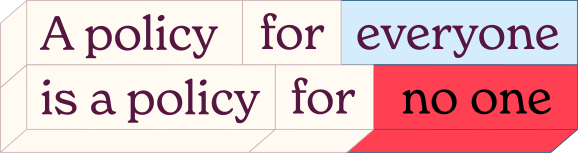
A single benefits structure cannot effectively serve a workforce with diverse priorities, life stages, and expectations.

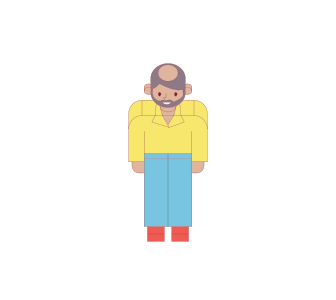
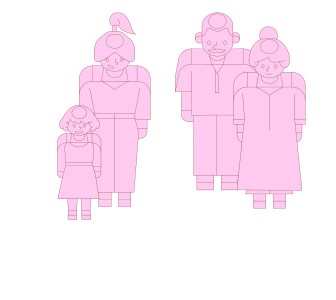
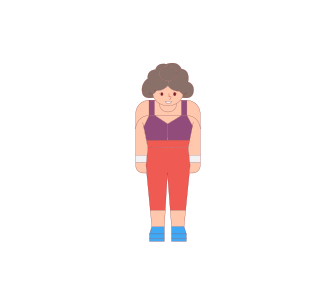
+ Mental health
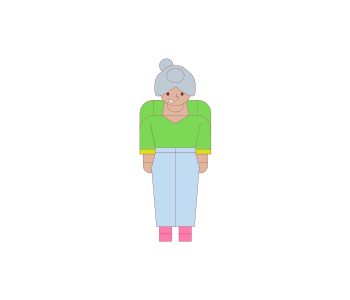
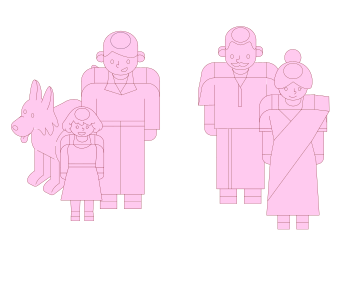


Within the same budget, every employee gets the most relevant cover for their life.
HR
controls
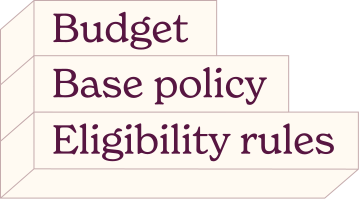
Employees choose
But



Everyone offers choice. The test is whether it survives to the claim. Here's where most Flex programs break:

Over-scoped on day one. Dense menus, every option switched on, no honest read of your workforce or risk.
A cost and risk spike lands at renewal.

A separate, clunky tool. No guidance, low engagement, selections left incomplete or abandoned.
Every cycle starts cold.

1,000+ employees, 1,000+ coverage decisions, none of them synced. What was selected isn't what the insurer processes. Coverage applies at the pool level, not the member level — and HR fields every mismatch.
Flex was never just a front-end experience. It's an operating system for benefits.
We built FlexCare at Plum to solve exactly this: run enrollment, endorsement and claims on one connected system.
Hear it from Saurabh Arora,
Co-founder & CTO, Plum Benefits
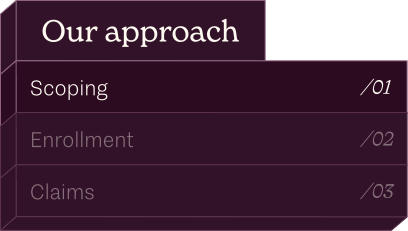
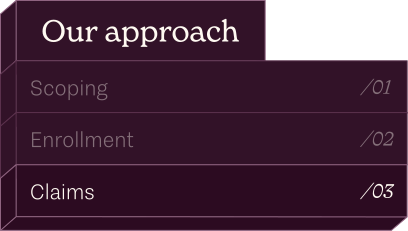
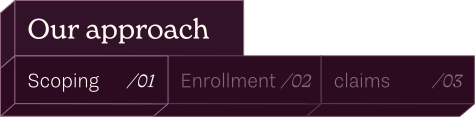
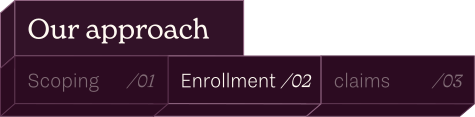
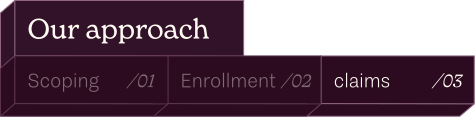

Built according to your workforce, usage, and risk appetite
We start early: T-4 months before renewal, not rushed at the deadline
Benchmarked against peers and real medical-expense data, not guesswork
Scaled deliberately over renewal cycles, never zero to everything at once

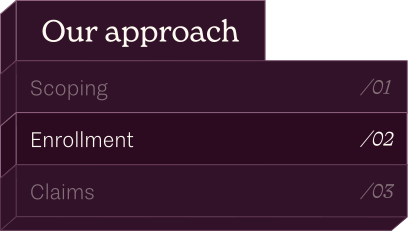
Ecommerce-style selection inside the Plum app employees already use for claims, consults, and medicines
.png)
No new tool, no learning curve
Guided recommendations and nudges that drive the right choice, first time
Peak enrollment:


One source of truth across enrollment, and claims
What's selected is exactly what's processed
Read at the member level — coverage, copays, limits — from enrollment to discharge
Scaled deliberately over renewal cycles, never zero to everything at once
Claims NPS


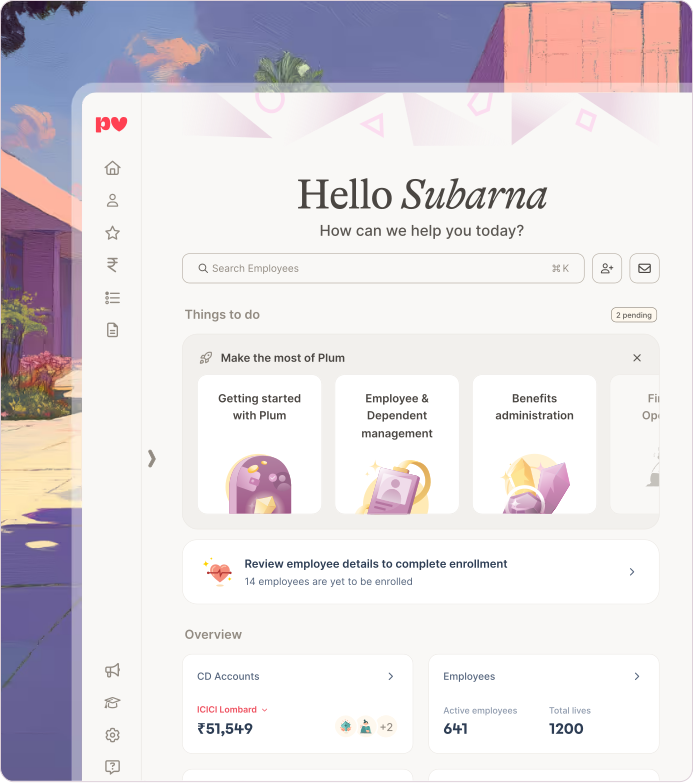
One dashboard to design, run, and stay on top of your entire Flex program.
See everything that needs action, in one place
Employees waiting on day-one coverage, pending endorsements, enrollments still open, sync issues to resolve.
Configure any program without code or manual stitching
Set budgets, guardrails, cohorts, modular plans, add-ons, dependents, and contribution rules directly in the platform.
Track adoption and spend as it happens
Watch enrollment progress, wallet utilisation, and program cost in real time
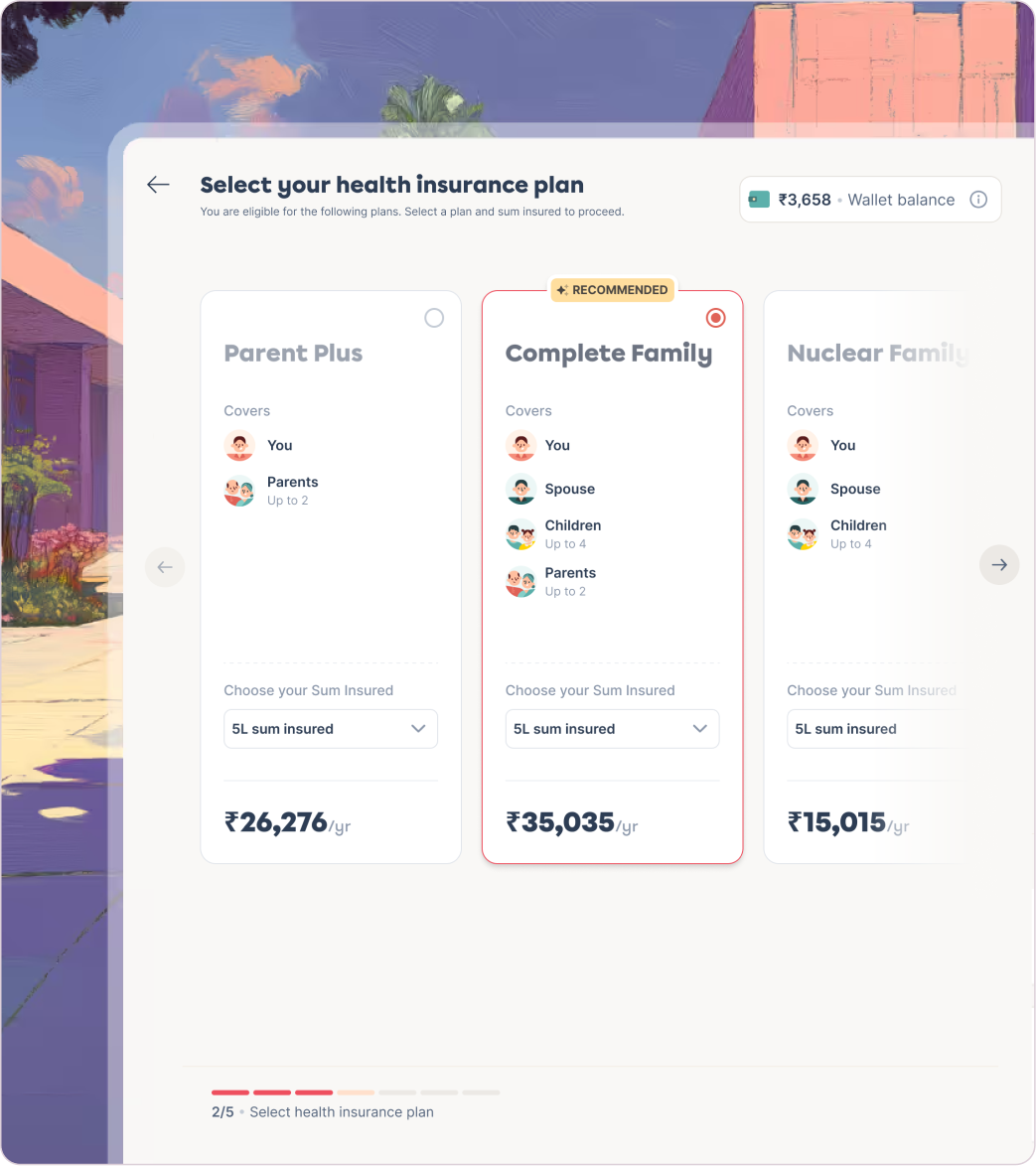
Benefits they can actually understand, choose, and use. All in one app.
Build the cover that fits their life
Pick a higher sum insured, add parents, or put budget toward maternity, OPD, diagnostics, pharmacy, or fitness.
Choose with confidence
Guided recommendations and clear, comparable plan views help them pick the right coverage the first time.
Spend their wallet on everyday health
Unused budget becomes a wallet for day-to-day needs: consults, medicines, wellness, etc.



flexible benefits,
built to work at scale.
What are flexible employee benefits?
Flexible employee benefits, also called Flex benefits, is a model where a company sets a budget and a few ground rules, and each employee chooses the coverage and add-ons that fit their own life, instead of everyone receiving the same standard plan. Someone might pick higher health insurance; another might add parents or choose OPD, therapy, or fitness.
How does a flexible benefits plan work for employees?
An employee receives a defined budget from their employer at enrollment time. They then choose from a menu of coverage options and add-ons — sum insured tiers, family members to cover, wellness, OPD, diagnostics, and more — within that budget. The selections they make are carried through to their policy and claims.
Can employees choose their own benefits under a flexible plan?
Yes, that's the core idea. Within the budget and rules the employer sets, employees can typically choose their sum insured, which family members to cover, and optional add-ons like OPD, maternity, dental, elder care, or pet care. The degree of choice depends on how the program is designed: some employers offer a few options; others offer a fully modular pick-and-choose set. Either way, the employee shapes their own coverage rather than receiving a fixed plan.
Why should employers offer flexible employee benefits?
Three reasons. First, a single standard plan can't serve a diverse workforce. The 24-year-old, the new parent, and the employee caring for ageing parents need fundamentally different things. Flex lets every employee get the most relevant value from the same budget. Second, flexible benefits signal trust and autonomy, which affects how people show up and whether they stay. Third, it's becoming the standard — 80% of Indian organisations already recognise the need to move away from traditional benefits. The organisations that move deliberately now are ahead of the ones who'll be forced to later.
How do HR teams implement a flexible benefits plan?
Most implementations fail because they go from zero to maximum complexity in one renewal cycle. The right approach is the opposite: start with where you are today, scope the program to your actual workforce and risk appetite, and scale gradually over renewal cycles. In practice, that means getting an advisor involved at least four months before renewal, benchmarking against peer and medical-expense data, and designing the program before choosing technology — not the other way around. The technology matters too: enrollment, endorsement, and claims need to run on one connected system, or what an employee selects won't match what's honoured at their claim.
Is Flex right for my organisation?
If you give employees any choice over their benefits today, you're already doing Flex. The question is where your program sits today and whether you got there on purpose. FlexCare is built to work across organisations of different sizes and maturity levels. We start with where you are and scale deliberately from there.
Won't giving employees more choice increase our costs?
Not if the program is designed carefully. More choice can create cost and risk issues if poorly scoped — which is exactly why we get involved T-4 months before renewal, benchmark against real peer and medical-expense data, and scale gradually over renewal cycles rather than switching everything on at once.
What makes FlexCare by Plum different from other Flex programs?
Most Flex programs handle the front-end and hand off the rest. FlexCare runs the entire operating system — enrollment, endorsement, wallet, and claims on one connected system — so what an employee picks is exactly what's honoured at their claim.
Does FlexCare work for large, diverse workforces?
Yes. FlexCare is built for enterprise scale. It handles large teams, different cohorts, modular plans, add-ons, dependents, top-ups, and contribution rules — all on one platform, without manual stitching. Every employee's choices are captured accurately and carried through to their claim, regardless of how many employees or how different those choices are.
FlexCare by Plum is the operating system for your flexible benefits.
Built so your benefits can flex as much as you need them to, and still hold.

.svg)
Future-forward
workplace wellbeing
We're not just participating in the conversation about workplace wellness. we're leading it. Through comprehensive research, industry collaboration, and data-driven insights, we're helping shape how modern companies care for their people.


.avif)